Do You Need Moisturizer After a Sheet Mask?
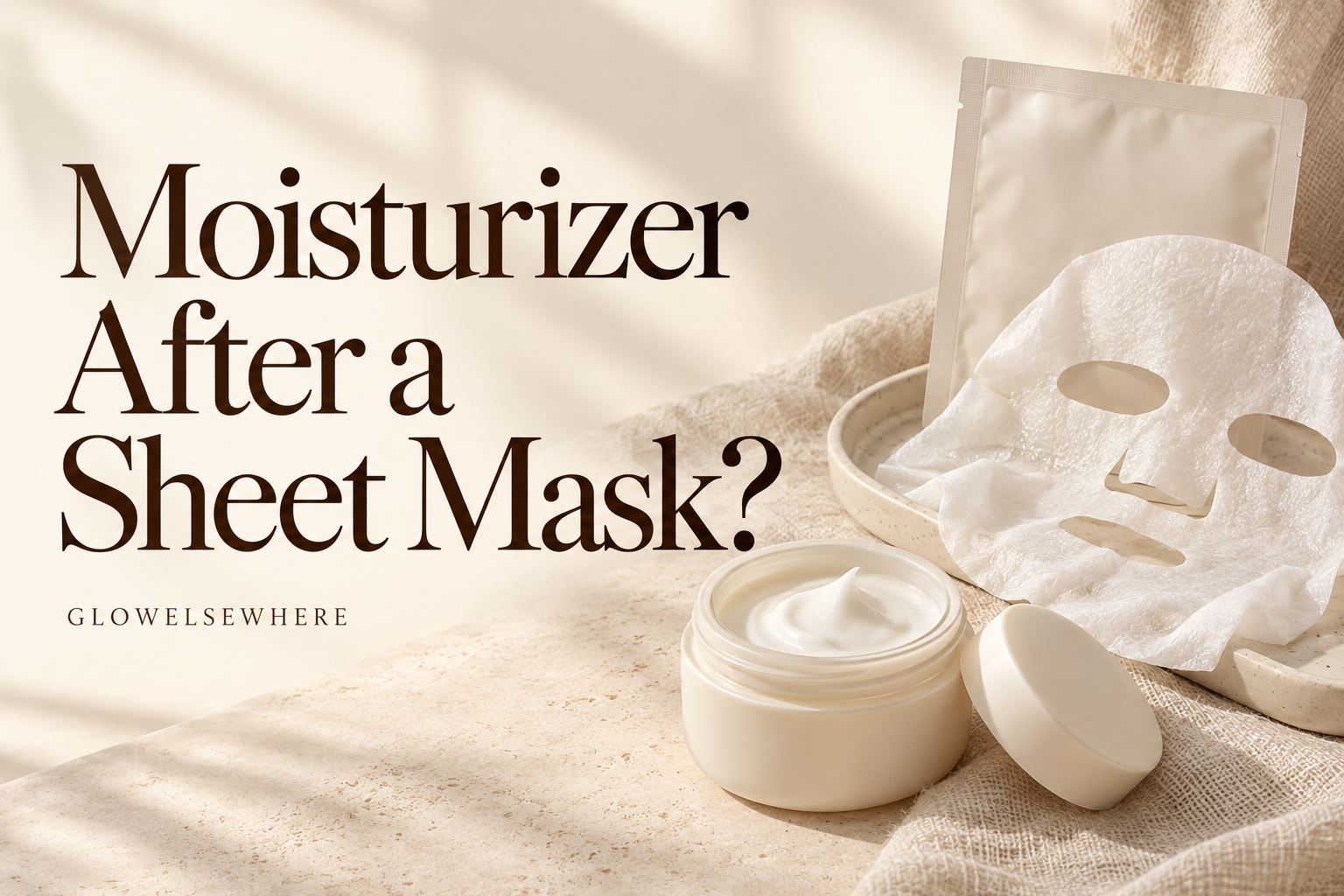
Do you need moisturizer after a sheet mask if your skin already feels hydrated? Your face may still be covered in essence, making another layer seem unnecessary. Here is how to decide whether to apply cream, skip your usual serum, or adjust your routine.
After almost five years of working as a flight attendant, sheet masks have become part of my post-flight skincare routine. On nights when I use one, my routine includes cleansing, a sheet mask, an ampoule, and cream.
But that does not mean everyone needs all those steps.
After a typical hydrating sheet mask, following with a moisturizer that suits your skin is a sensible starting point. An extra serum or ampoule is optional, and the amount of moisturizer you need depends on the mask’s formula, its instructions, and how your skin feels.
This guide focuses on conventional, essence-soaked sheet masks. Rinse-off masks and some overnight hydrogel masks may have different instructions.
Why Use Moisturizer After a Sheet Mask?
The hydrated feeling you get immediately after a sheet mask is not quite the same as keeping your skin comfortable afterward.
Common mask ingredients such as glycerin and hyaluronic acid help attract and hold water. Depending on its formula, a moisturizer can combine those ingredients with others that soften the skin and help reduce moisture loss.
That does not mean every sheet mask only adds water. Some contain a rich, creamy essence, while others leave a much lighter finish.
For most conventional hydrating sheet masks, following with moisturizer is a practical approach. However, the right amount will vary. Check the product’s directions and adjust according to your skin rather than automatically applying a thick layer.
A sheet mask does not automatically make moisturizer unnecessary, but it does not mean you need your richest cream either.
A Simple Routine After Removing a Sheet Mask
For a conventional hydrating sheet mask, start with these steps:
- Remove the mask after the time stated on the packaging.
- Gently spread the remaining essence over your skin.
- Decide whether an additional serum serves a purpose. If you only wanted extra hydration, you can usually skip it.
- Finish with a moisturizer you already know works well for your skin.
You do not need to rub repeatedly or pat your face hard to make every trace of essence disappear. There is also no need to empty the remaining contents of the packet onto your face.
The aim is a comfortable finish, without persistent tightness or unnecessary heaviness.
Does Oily Skin Need Moisturizer After a Sheet Mask?
Having oily skin does not automatically mean you should skip moisturizer after masking. It also does not mean you need the same rich cream someone with very dry skin might prefer.
My own skin is oily-combination and prone to dehydration. I can have a shiny forehead while other areas feel tight, so surface shine alone does not tell me whether my skin feels adequately moisturized.
If cream feels too heavy after a mask, consider changing the texture or amount before removing the moisturizing step altogether.
| How your skin feels after masking | What to consider |
| Your cheeks or the area around your mouth feel tight | Apply a familiar cream, focusing on the areas that feel dry. |
| Your skin feels hydrated, but rich products feel heavy | Try a small amount of a lightweight lotion or gel cream. |
| Your T-zone is shiny while your cheeks feel dry | Adjust the amount by area rather than applying the same layer everywhere. |
| A lot of sticky essence remains | Skip the extra serum and see how a thin layer of moisturizer feels. |
This does not mean you need to buy a new product. Start by adjusting the amount of a moisturizer your skin already tolerates.
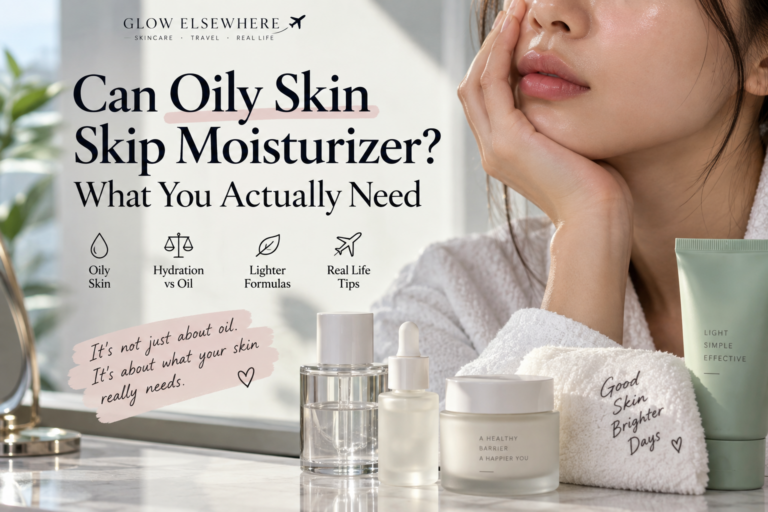
For more on balancing shine and hydration, see Can Oily Skin Skip Moisturizer? What You Actually Need.
Do You Need Serum or Ampoule After a Sheet Mask?
An additional serum or ampoule is not a required step after a sheet mask.
If you used the mask for hydration, another hydrating serum may serve a similar purpose. Rather than automatically adding every product from your usual routine, ask what the extra step would contribute.
The ampoule in my post-flight routine is a personal choice. It is not a condition for getting benefits from a sheet mask.
Pay particular attention to masks containing exfoliating acids or other active ingredients. Layering similar actives across several products can increase the chance of dryness or irritation, especially if your skin is already sensitive.
For a straightforward hydration-focused evening, a sheet mask followed by moisturizer may be enough.
If you do choose to include other products, my guide to how to layer skincare products explains where different steps generally fit.
Should You Wash Your Face After a Sheet Mask?
Most conventional essence-soaked sheet masks are intended to be removed without rinsing, with the remaining essence gently spread over the skin. Always check your mask’s instructions, since some products are designed to be washed off.
However, irritation changes the advice.
If your skin starts itching, burning, or stinging, remove the mask and rinse off the product. Do not assume that discomfort means the ingredients are working. If symptoms persist or your skin gets worse, seek advice from a dermatologist.
Stickiness and irritation are also different things. A tacky finish alone does not establish an allergy, but you do not have to enjoy or tolerate an unpleasant texture. If a mask consistently feels too heavy, a lighter formula may be a better fit.
How Long Should You Wait Before Applying Moisturizer?
There is no universal countdown you need to follow after a conventional hydrating sheet mask. Follow any specific directions provided with your product.
If essence is dripping from your face, gently spread it out first. Once it has settled enough to apply the next product comfortably, you can use your moisturizer. You do not need to wait until your skin feels completely dry or tight.
If products roll up or feel excessively heavy as you apply them, try using less next time or leaving out the extra serum.
Adding more layers is not always the most useful response to dryness. Sometimes the simpler adjustment is choosing a suitable moisturizer and using an amount that feels comfortable.
Is It Better to Leave a Sheet Mask On Longer?
Following the mask’s wear time matters just as much as what you apply afterward.
Essence remaining in the sheet is not a reason to leave it on beyond the recommended time. Longer use does not guarantee better results, and excessive use can cause irritation.
Avoid falling asleep in a conventional sheet mask unless the product is specifically intended for overnight wear.
Some hydrogel masks are designed for extended or overnight use, but those directions should not be applied to every mask. Check the instructions for the exact product you are using.
You also do not need to use a sheet mask every day. If your regular routine keeps your skin comfortable, masking can remain an optional step.
How This Fits Into My Post-Flight Routine
My post-flight routine can include cleansing, a sheet mask, an ampoule, and cream. What I would encourage someone else to take from it is the habit of checking what their skin needs, rather than copying every step.
If a hydrating mask has already done the job you wanted from an extra hydration serum, you can leave that serum out. When applying moisturizer, start with a familiar product and adjust the amount to suit your skin.
The amount of essence left on your face is not the most useful measure of a successful mask. What matters more is whether your skin feels comfortable after you finish—and whether that comfort lasts once the freshly applied feeling has faded.