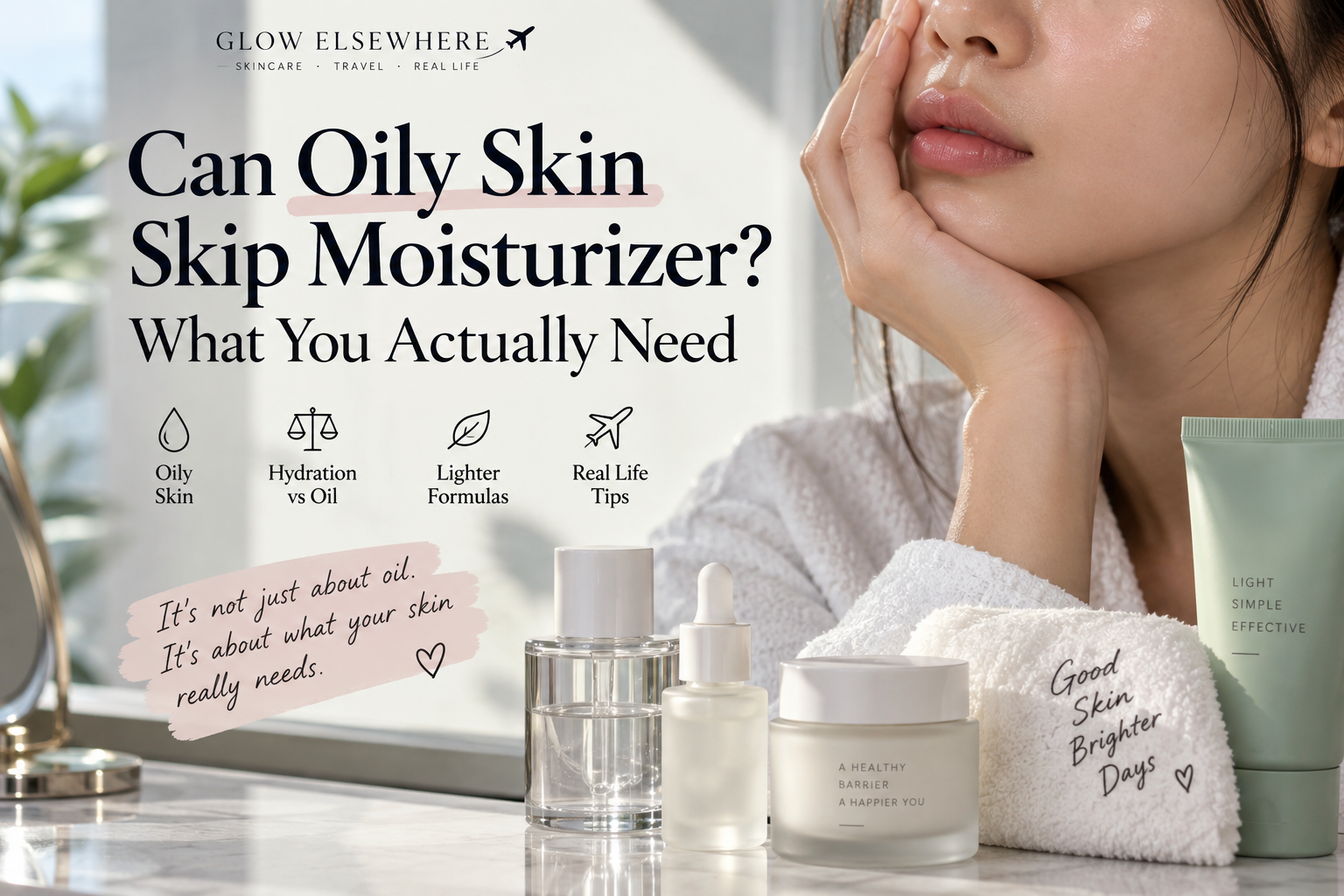
Can Oily Skin Skip Moisturizer? What You Actually Need
Can oily skin skip moisturizer? If your face already feels shiny or greasy, adding another layer of cream can seem unnecessary.
I used to think the same way.
Because my skin gets oily, moisturizer was once the easiest step for me to minimize or skip. But oily skin and well-hydrated skin aren’t necessarily the same thing.
At the same time, that doesn’t mean every person with oily skin needs a heavy cream or multiple layers of moisturizer.
The better question is: what does your skin actually need?
Oily Skin Can Still Need Moisture
Oil and hydration aren’t the same thing.
Sebum is the oil produced by your skin, while hydration refers to water in the skin. This means a face can look shiny and still feel tight or uncomfortable.
That’s something I didn’t understand very well when I first started paying closer attention to my skin.
I assumed oiliness meant I should focus mainly on removing oil. Over time, I realized my skin could be oily in some areas while still feeling dehydrated in others.
If that sounds familiar, you may also want to read Oily but Dehydrated Skin: Why Your Face Feels Greasy and Tight.
So, Can You Actually Skip Moisturizer?
Sometimes, depending on your skin and the rest of your routine.
There isn’t one moisturizer rule that applies to every oily face.
If your skin already feels comfortable and you’re using other products that provide enough hydration or emollience, you may find that a separate moisturizer isn’t always necessary.
Other people may feel tight, dry or uncomfortable without one.
Your environment matters too. Skin may behave differently in humid weather than it does after hours in air conditioning, during colder weather or while traveling in a dry environment.
Instead of automatically adding or removing moisturizer because your skin is labeled “oily,” pay attention to how it responds.
Signs Your Oily Skin May Benefit From Moisturizer
Consider what happens after cleansing and throughout the day.
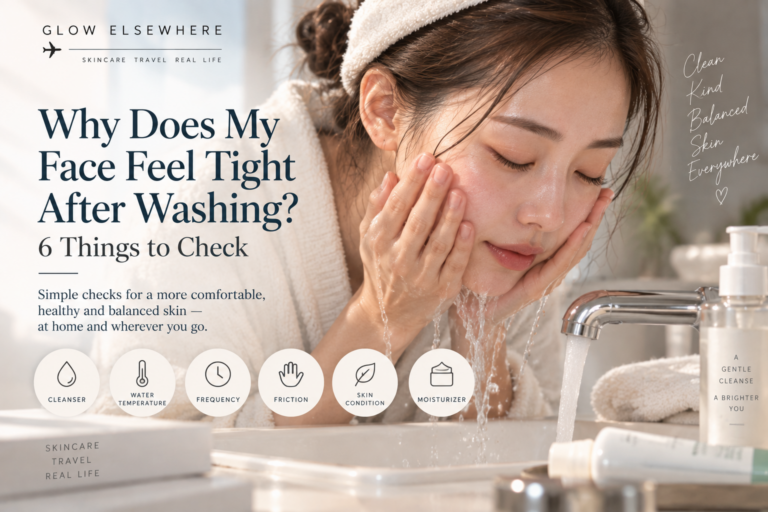
Does your skin feel tight after washing?
Do some areas feel dry while your forehead or nose becomes shiny?
Are you experiencing flaking or discomfort?
Are you using products that can be drying or irritating?
Those clues may be more useful than oiliness alone.
If your skin feels consistently comfortable without a separate moisturizer, you don’t need to add a heavy cream simply because a skincare routine tells you to.
Your Acne Routine Can Change the Answer
This is particularly important if you’re using acne treatments.
Ingredients and treatments such as benzoyl peroxide, salicylic acid and some retinoids can cause dryness or irritation. The American Academy of Dermatology notes that moisturizer can help skin tolerate some acne treatments.
In that situation, skipping moisturizer simply because your skin is oily may not be the best approach.
The goal is not to eliminate every trace of oil.
It’s to keep your routine effective without making your skin unnecessarily uncomfortable.
Choose Texture Based on Your Skin, Not the Label
If you dislike the feeling of moisturizer, the problem may be the product rather than moisturizer itself.
You don’t necessarily need a rich cream.
Depending on your skin, you might prefer a lightweight lotion, gel or gel-cream that feels more comfortable.
If you’re acne-prone, you can also look for products labeled oil-free or non-comedogenic, although no label can guarantee that a product will work perfectly for everyone.
Texture matters to me a lot.
Especially when I’m applying makeup afterward, I don’t want skincare sitting heavily on my face. I prefer enough moisture to make my skin feel comfortable without creating unnecessary layers underneath my base makeup.
More Moisturizer Isn’t Always Better
I learned both sides of this.
At one point, because my skin was oily, I sometimes used very little moisturizer or skipped it.
Later, once I started paying more attention to dehydration, I occasionally went too far in the opposite direction and applied more cream than I needed.
That wasn’t ideal either.
When I used too much before makeup, my base could move or pill instead of sitting smoothly.
Now I don’t think of moisturizer as something I either need to avoid or pile on.
I use enough for my skin to feel comfortable and adjust depending on the day.
Pay Attention to Your Environment
Your moisturizer needs don’t have to stay identical all year.
Hot, humid weather may make a heavy cream feel unnecessary. Long hours in air conditioning or a very dry environment may make the same skin feel different.
Travel is a good example for me.
Because I spend a lot of time in aircraft cabins and other dry, air-conditioned environments, I’ve learned not to judge my skincare needs only by how oily my face looks.
How my skin feels matters just as much.
That doesn’t mean everyone needs to change moisturizer whenever they travel. It simply means environment is another factor worth considering.
A Simple Way to Decide
Instead of asking, “I have oily skin, so should I skip moisturizer?” try checking your skin after your routine.
If it feels comfortable, you’re probably closer to the right balance.
If it regularly feels tight or dry, your routine may need more support.
If your moisturizer consistently feels greasy, heavy or uncomfortable, you may need less product or a lighter texture rather than no moisturizer at all.
And if you’re dealing with persistent irritation, painful acne, significant peeling or another ongoing skin concern, a dermatologist can help you build a routine around the actual condition rather than your skin-type label.
The Bottom Line
So, can oily skin skip moisturizer?
For some people and on some days, possibly. But oily skin doesn’t automatically mean your skin has enough hydration, and it doesn’t mean moisturizer is unnecessary.
You also don’t need to compensate with the richest cream you can find.
For me, the biggest change was moving away from the two extremes: first avoiding moisturizer because I thought my skin was too oily, and later assuming more moisturizer must be better.
The goal is much simpler.
Use what your skin needs to feel comfortable—not what you think an “oily skin routine” is supposed to look like.